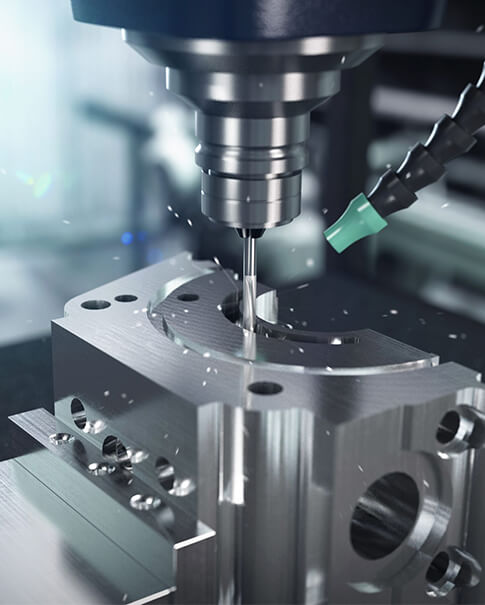
Automotive CNC machining is not about making one perfect showpiece. It’s about making 40,000 identical parts, one after another, with zero out-of-spec units slipping through.
For automotive suppliers across Germany, the UK, France and the US, the bar keeps getting higher: tighter tolerances, lighter materials,
shorter lead times, and zero tolerance for quality failures. A single bad part can shut down an assembly line — and the costs are brutal.
As an IATF 16949 compliant supplier, we’ve spent years refining our processes for automotive and EV work. This article breaks down the core applications,
real-world tolerance data, and the process controls that make high-volume automotive production actually work.
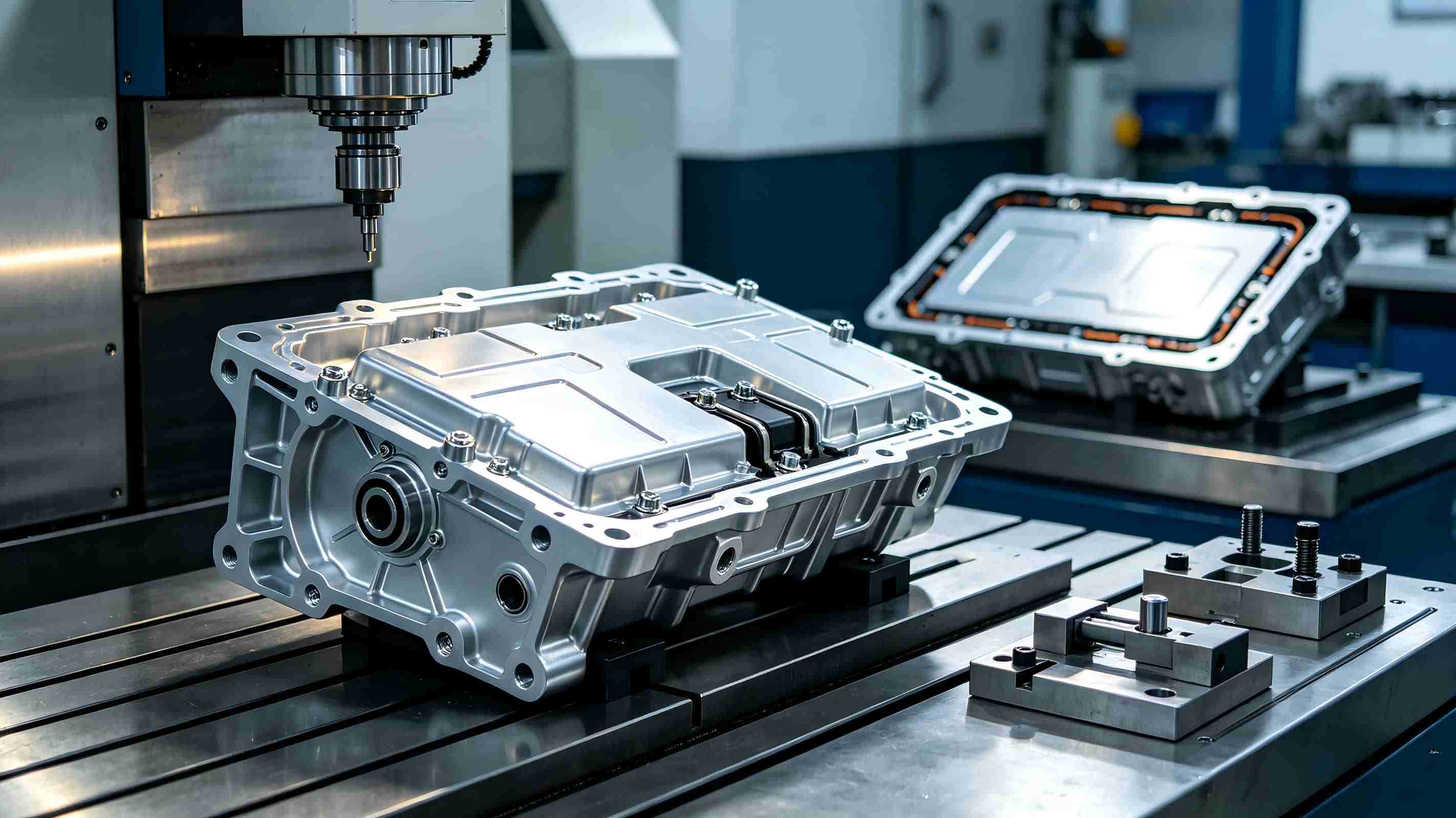
Engine blocks, cylinder heads, crankshafts — these are the classic high-demand automotive parts. Bore concentricity, sealing surface finish,
and batch consistency are everything. A bore that’s off by 2 microns will leak oil under pressure.
Typical requirements:
· Cylinder bore concentricity: ≤0.002 mm
· Sealing surface finish: Ra 0.4 µm or better
· Common materials: Cast iron, cast aluminum alloys, forged steel
The real challenge here isn’t hitting the spec once. It’s holding it across thousands of parts as tools wear and machines warm up.
With optimized multi-axis routines, dedicated tooling, and in-process probing, top shops cut production time by 40% and drop defect rates from 5% to under 0.5%. We’ve seen it on our own lines.
EV work is the fastest growing part of our automotive business, and it comes with a whole new set of pitfalls.
Battery housings, cooling plates, motor brackets — they all need lightweight aluminum, thin walls, and tight flatness.
The biggest trap for new suppliers? Thin-wall distortion. You machine the part perfectly, release it from the fixture, and it warps 0.08mm from residual stress.
Suddenly the cooling plate doesn’t seal, and the whole part is scrap.
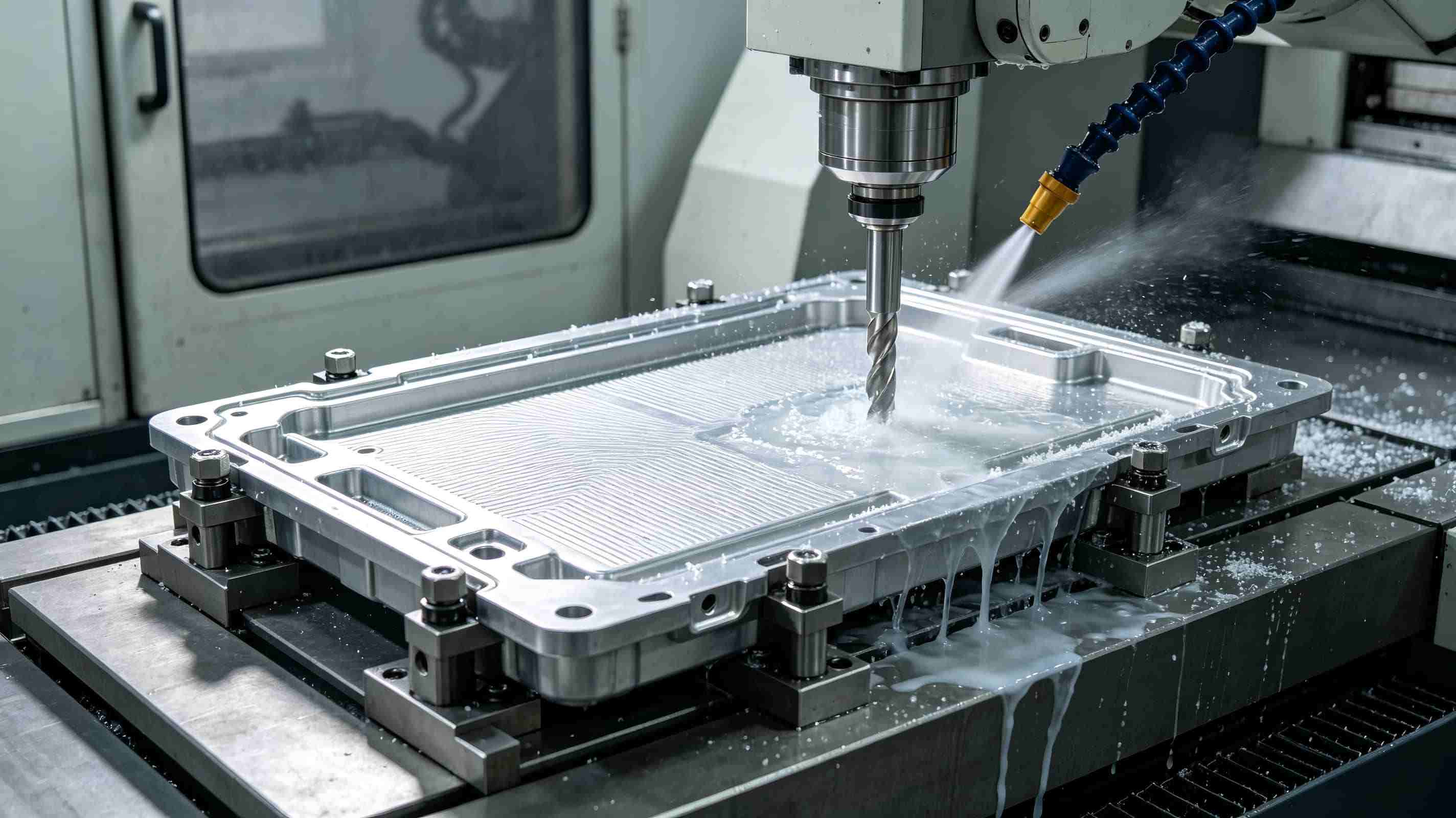
EV parts require:
· Low-stress machining routines for thin-wall aluminum
· Tight flatness control for thermal interface surfaces
· Consistent quality across high-volume runs
A lot of suppliers jumped into EV work without fixing their fixturing and stress relief processes. Most of them lost money on their first few batches.
We did too, back when EV work first started picking up.
Steering gear housings, suspension control arms and wheel hubs require high dimensional accuracy across multiple angled hole positions — and they’re often made
from thin-wall castings that want to twist under clamping force.
Typical requirements:
· Critical hole positional tolerance: ≤0.03 mm
· Rotating component concentricity: ≤0.003 mm
· Sealing surface finish: Ra 0.4–0.8 µm
The trick here is fixturing. You have to hold the part firmly enough to cut it, but not so hard that you distort it. We use custom low-clamping-force fixtures for ADC12 aluminum steering housings,
with PCD tooling for clean, consistent cuts. It took three iterations to get right, but now we hold position tolerance reliably across full batches.
Transmission housings, gear shafts, differential cases — lots of bores, lots of bearing seats, lots of mating surfaces. Bore tolerance is usually ±0.01mm or tighter,
and positional accuracy for fastener holes has to be spot-on. These parts live or die by setup accuracy and tool consistency.
The table below reflects standard industry requirements and typical production performance for high-volume automotive CNC components:
|
Component |
Material |
Critical Requirements |
Standard Tolerance |
Target Scrap Rate |
|
Engine cylinder block |
Cast iron / Cast aluminum |
Bore concentricity, surface finish |
≤0.002 mm |
<0.5% |
|
Cylinder head |
Cast aluminum |
Deck flatness, port geometry |
≤0.01 mm |
<0.5% |
|
EV battery housing |
Aluminum 6061 |
Flatness, thin-wall integrity |
≤0.05 mm |
<1% |
|
Steering gear housing |
ADC12 Aluminum |
Multi-angle hole position |
≤0.03 mm |
<1% |
|
Wheel hub assembly |
Forged steel / Aluminum |
Concentricity, runout |
≤0.003 mm |
<0.5% |
|
EV cooling plate |
Aluminum 6063 |
Sealing surface flatness |
≤0.02 mm / 100mm |
<0.8% |
Anyone who tells you “we just buy good machines and make good parts” has never run a 400,000-piece automotive program.
We saw this first-hand working with a European Tier 1 supplier a few years back. They had a high-volume steering component program destined for the German market,
and their previous supplier was seeing 2–3% scrap from slow tool wear drift.
The fix wasn’t fancier machines. It was closed-loop process control:
· On-machine probing after every 10 parts
· Real-time tool offset adjustments based on measurement data
· Offline gauging verification for all critical dimensions
Within two months, scrap dropped to near zero. They added robotic material handling and upgraded to full 5-axis lines, and the line now runs almost unattended.
That’s Industry 4.0 in practice — not buzzwords, just fewer bad parts.
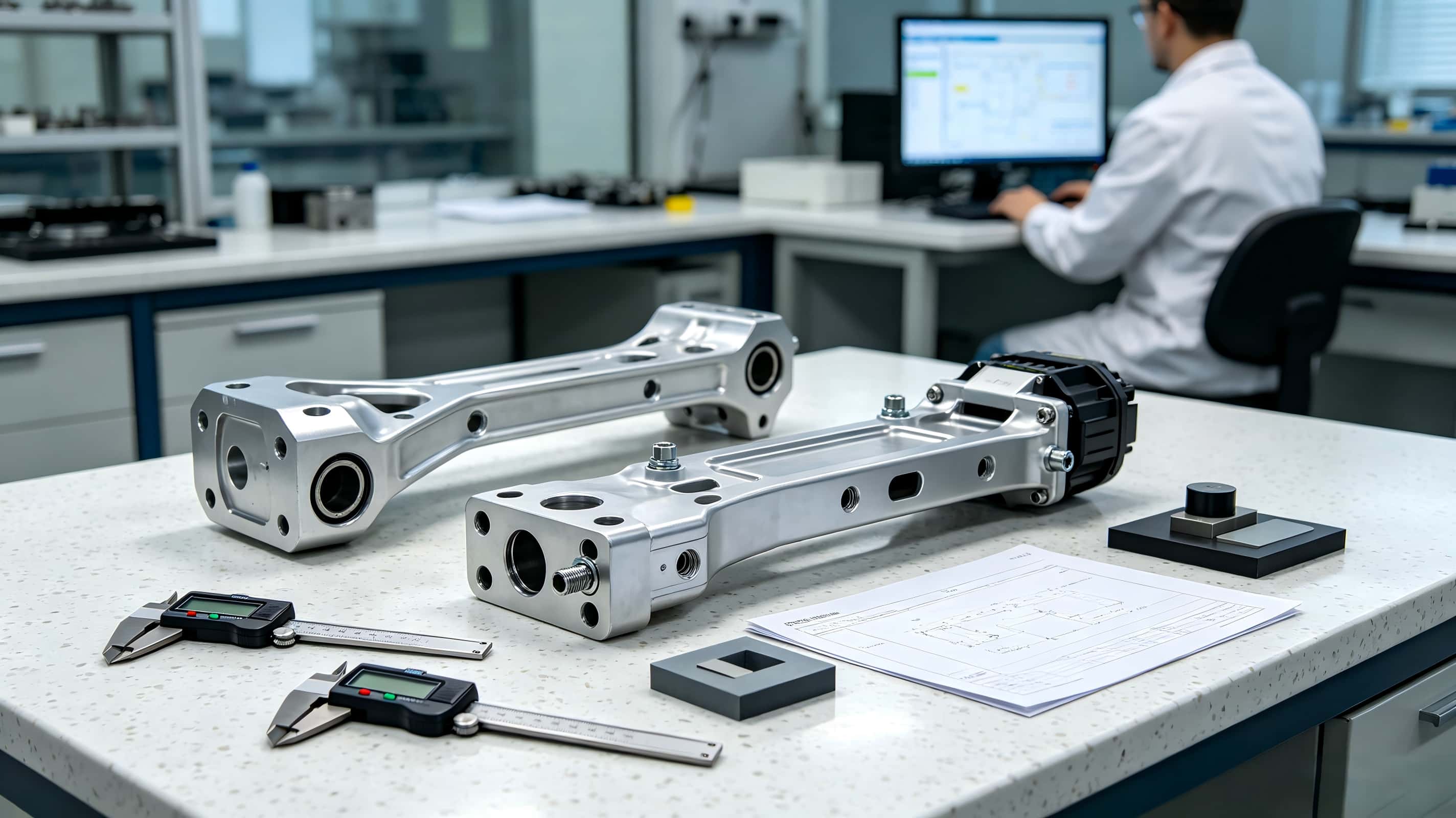
After dozens of automotive programs, these are the truths we wish every buyer knew upfront:
1.Process control is non-negotiable. On-machine probing isn’t an extra — it’s mandatory for high-volume work.
2.Scrap rates under 0.5% are achievable, but not with cheap tooling and lazy inspection.
3.Material dictates process. Thin-wall aluminum needs completely different fixturing and cutting parameters than cast iron.
4.Documentation is mandatory. You will need material certs, CMM reports, PPAP packages, and Cpk data. If your supplier can’t provide these, walk away.
5.Volume changes the math. 4-axis and 5-axis get cheaper per part as volume goes up, because you eliminate setup waste.
Automotive and EV manufacturing doesn’t reward flashy promises. It rewards consistent, repeatable, well-documented production.
IATF 16949 certification is the starting line, not the finish line. What matters is what you do on the shop floor, every shift, to keep parts in spec.
If you’re sourcing automotive or EV components and you’ve had issues with inconsistent quality, missed PPAP deadlines, or unexpected scrap, we can help.
Planning your next automotive or EV component project? Send us your CAD files and volume requirements. We’ll review your design, give you realistic DFM feedback,
and provide an IATF-compliant formal quote within 24 hours. No fluff, no overpromising — just solid production advice and parts that meet your spec, every time.
Tel : 0755-23596843
WhatsApp : +86-13267211181
Email : sales02@gt-proto.com
No.18, Shaqi Community Center Road, Xinqiao Street, Baoan District, Shenzhen, Guangdong Province, China 518104
© 2026 Shenzhen GT Prototype Co., Ltd All rights reserved.
SitemapPrivacy PolicyXml